How to host a meeting that will set you apart and progress your career
Let's Talk - Book a no-obligation discovery call
Talk to us about Executive Coaching
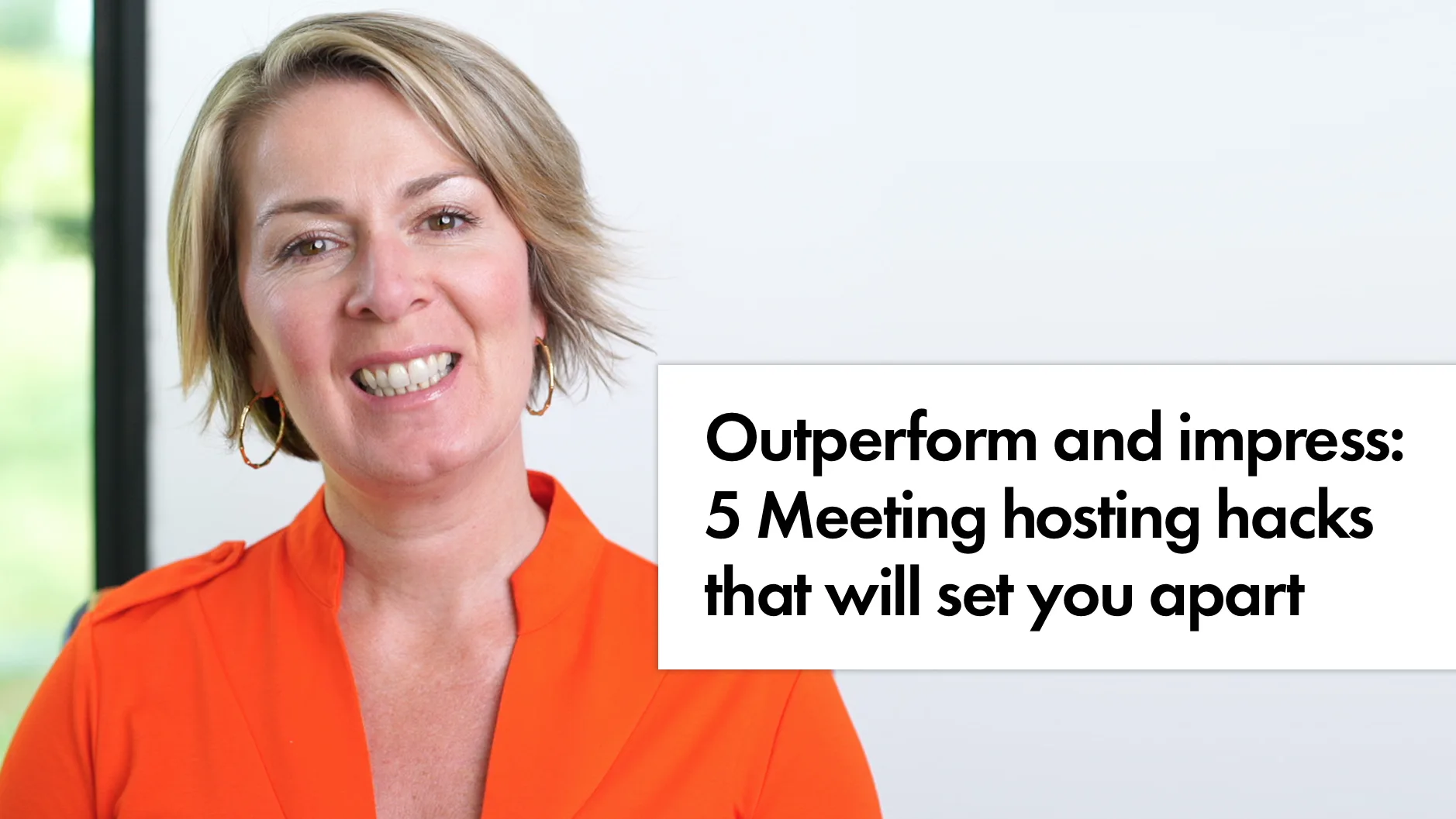
How to host a meeting that will set you apart. In this video, we delve into the art of hosting a meeting, a crucial skill that can significantly impact your career progression. We discuss the difference between just holding a meeting and truly hosting one, and explore various strategies to engage attendees, manage time effectively, and drive productive discussions. This guide will arm you with the tools you need to turn any meeting into a platform for meaningful communication and collaboration.
There's career value in hosting a meeting
Meetings take place all the time at work, don't they? And often they're so boring and pointless that wouldn't it be awesome if you could get your hands on them and run them differently? Now there's value there, for sure, but there's also value for you in your career progression. If you're not quite ready to deliver keynotes and presentations, it might be that you could volunteer to run the next meeting or suggest some sort of turn-taking.
This is really valuable to any boss, leader, or manager who is always having to do it. They might want the team to take over the running of it with guidance.
Hosting a meeting is an opportunity to be seen
The point is it's a real opportunity for you, to be seen; you might be a bit of a best-kept secret. You might want to just stop being a little bit more visible in your team and your business. But it can be daunting to think about being in the spotlight yourself, but by hosting a meeting, you've got a lot of opportunity there to be seen without too much pressure. There are things you can learn and do which enable your success. Here's my advice.
Planning for success - Host, don't hold a meeting. What do you want people to do, know and feel?
First of all, let's look at planning for success. One thing I would say is that you don't have to hold a meeting. You could think about hosting a meeting. This is where you're the host and you make sure everyone gets what they came for.
You might have a list of people who've said yes, they're going to come along, or people who've been invited. Why not get in touch with them and ask them what they would like to know about this topic? What would they like to be able to do once they've had this meeting? What input do you need to help you do your job better? You might not want to word it exactly like that, but then you're giving people a chance to inform the agenda in a way that's specific to them, that can begin to make everyone feel a little bit more included and heard. That's what a host should be all about. You really should consider what the people are coming for. What do they want to do? What do they need to know? And how do you want to make them feel by the end of this session?
That's a good rule of thumb for all sorts of interactions that you have, considering the "do, know, feel" idea of things.
What elements can you include in your meeting?
The second part of the planning, and this is really going to set you up for some solid, confident performing on the day, is to consider all of the different elements.
What could you include in that meeting that will keep people engaged, enthusiastic, and wanting to come back for another meeting? Imagine that's a radical suggestion, isn't it?

Bit Famous works with businesses and organisations to help them communicate with confidence.
By Penny Haslam
MD and Founder - Bit Famous
FREE resources for leaders and people professionals from Penny Haslam and Bit Famous
Sign up for my awesome Workplace Confidence email
Share this page










Where people professionals share the great work they do!

Include a guest speaker
You could think about a guest speaker, perhaps depending on how long you've got. Obviously, someone from another department or an external speaker from a different type of business or a client business that you deal with. Bring them in and say, "Right, we've got 10 minutes or you've got 20 minutes. The team really needs to know about this. Can you help? What are you going to talk about?"
So you're beginning to build your running order, I suppose you could call it. That's what we call it in TV and radio.
Team updates
And think about updates. Are there many bite-sized updates that members of your team could provide? It doesn't have to be grand; it could be really quick. The quicker, the better. Pace is everything. If you've got enough time, think about having a discussion where everybody gets to say something and interact on a particular topic.
It could be a broad topic or something that's a current challenge. If you can think about ways of positively moderating that so everybody gets heard, I recommend a book called Time to Think by Nancy Klein. Read that, and it will help you facilitate getting everyone to say something on a particular topic, running it tightly to time, and making sure everyone gets heard. "Thank you very much, everybody. Let's move on."
Mini panel discussions
You might even like to think about a panel discussion, like a mini panel discussion, where the guest speaker and a couple of others who are brought in at that time get to share their thoughts on certain topics. You'll prepare some questions in advance. You might even ask the delegates for questions in advance, saying, "We're having these three people. It's a chance to pick their brains and find out more about how things work. What might you ask them?" Fantastic.
Get them chatting for a good 20 minutes, and then you can open it up to the rest of the meeting delegates or attendees for their questions. That's also a really good way for you to be seen by others in your organisation.
You have a guest speaker who we've discussed, and there might be two other department heads or members of the executive committee who you think would be really good in this section. Reaching out to them is a nice way for you to be seen and have involvement with them that isn't too pressured, like doing an elevator pitch or having a "Hey, I'm really great at my job" moment.
Think about who that might be and prepare them in advance because you know what? They don't like being caught out. You need to give them some guidance on what the questions might be.
Meeting timing
The final part of the planning stage for your success is to pin all this down time-wise. The easiest way to do that, at a glance, is to create a grid in a Word document with a time column and a script column. What are you going to say? Who is doing what at what time? So if you're kicking off at 10 a.m., you introduce with these words: "This is what we hope to achieve with this meeting. This is what is going to happen. We're going to hear from this person, we're going to hear from that person. But first, we're going to go to our guest speaker at five past 10 or an update at five past 10, and they're going to have 10 minutes."
So at 10:15, you'll be back on and say, "Thanks very much. Any questions?" The question session might run for 10 minutes, so at 10:25, you should be wrapping up those questions and so on until you reach the end of your meeting duration.
It might seem a bit fiddly and unnecessary, but it's absolutely essential to keeping things running on time.
Hosting a meeting - Interrupting the boss
Next, let's think about the day, and we're going to stick with the theme of keeping things running on time because you have your schedule, running order, blueprint, or handy script, and you know what's happening.
However, you know what it's like, some people like to talk in meetings and they can go on a bit, and perhaps they don't know about your timing either. So it's your job to interrupt. Brilliant! You get a chance to interrupt the boss, smashing!
You don't need to do it rudely; you can do it politely. For example, "Hey, Bob, that's awesome, but we're going to have to leave it there because we have lots more to get through and different areas to cover."
Perhaps you can add that Bob will be available later, or ask, "Hey, Bob, are you happy to take questions and queries outside of this meeting time? Amazing, Bob! You're a superstar. Thanks so much. Let's move on because my schedule says so."
Your performance
All done! And this is the final point about your performance on the day—do it with a smile and stay hydrated. You're going to need water. You'll be thirsty. This is adrenaline stuff, especially if you've never done it before or you're very new to it, or if you've had a negative experience in the past where you didn't feel successful.
Feedback on hosting a meeting
Following this plan is crucial for your future success as a meeting host. Embrace the role, smile, breathe, and have a plan. You'll have a great time. And here's one more thing, I always have more to share. But actually, this is the sixth point. If you want feedback, make sure you ask somebody before you start for feedback and let them know you'll be asking for it at the end. Request that they make a note of what worked well, what could be improved, and any other suggestions for your future success as a meeting host. Be specific about the type of feedback you're seeking because most people are not great at giving feedback and tend to say, "Yeah, it was good." You don't know if it was genuinely good or if they're just being polite. What you want is to truly be good, but also to learn how to be even better. Good luck! Go host those meetings!
Video transcript: How to host a meeting
How to host a meeting at work and run team meetings effectively
So this is all about hosting a meeting or having a meeting, running a meeting, being the person who moves things along, keeps things running on time and makes sure everybody got what they came for, right? Now, meetings take place all the time in work, don't they? And often, they're so boring and so pointless that wouldn't it just be awesome if you could get your hands on it and run it in a different way? Now there's the value there for sure.
but there's also value for you in your career progression. Now, if you're not quite ready to deliver keynotes and presentations, it might be that you could volunteer to run the next meeting or suggest some sort of turn-taking. This is going to be really valuable to any boss or leader or manager who is always having to do it. It might be that they want the team to take over the running of it with guidance, obviously, and it but...
The point is it's a real opportunity for you to be seen. You might be a bit of a best kept secret. You might want to just stop being a little bit more visible in your team and your business, but it can be daunting to think about being in the spotlight yourself. But by hosting a meeting, you've got a lot of opportunity there to be seen without too much pressure. But there are some things that you can learn and do which can enable your success.
And lots of people say, my boss says I should be getting out there a bit more. I don't know how to. Well, this is one way of doing it.
How to plan a successful meeting at work before it starts
So first of all, let's look at planning for success. One thing I would say is that you don't have to hold a meeting. You could think about hosting a meeting. This is where you're the host and you wanna make sure everyone gets what they came for. So you might have a list of people who've said, yes, they're gonna come along or people who've been invited.
Why not get in touch with them and ask them, well, what would you like to know about on this topic? What would you like to be able to do once you've had this meeting? What inputs do you need in order to help you do your job better? Now, you might not want to word it exactly like that, but then you're giving people a chance to inform the agenda in a way that's specific to them. And that can begin to make everyone feel a little bit more included and heard. Brilliant.
That's what a host should be all about. And in that planning idea, when you're hosting something, you really should be considering what the people are coming for. What do they want to do? What do they need to know? And how do you want to make them feel by the end of this session? That's a good rule of thumb for all sorts of interactions that you have, considering the do no feel idea of things.
Ideas for structuring a team meeting so people stay engaged
The second part of the planning, and this is really going to set you up for some solid, confident performing on the day, if you like, is to consider all of the different element parts. What could you stuff into that meeting that will keep people engaged, enthusiastic, and wanting to come back for another meeting? Gosh, imagine, that's a radical suggestion, isn't it?
However, you can think about a guest speaker perhaps, depending on how long you've got obviously, but somebody from another department or an external speaker from a different type of business or a client business that you deal with, bringing them in, saying, right, we've got 10 minutes or you've got 20 minutes, the team really need to know about this, can you help, what are you going to talk about? And so you're beginning to build your...
running order I suppose you could call it. That's what we call it in TV, a running order on radio. Think about updates. Are there mini skinny little bite-sized updates that members of your team could input on? It doesn't have to be grand. It could be really quick. The quicker the better. I'm shaking my head here because pace is everything.
You could as well, if you've got enough time, think about having a discussion where everybody gets to say something and interact on a particular topic. It could be a broad topic, it could be something that's a challenge right now. If you can think about ways of positively moderating that so everybody gets heard. And I reference a book here which does that brilliantly and helps you. It's called Time to Think by Nancy Klein. Read that, you'll smash it. Getting everyone to say something on a particular topic, running it tightly to time, making sure everyone gets heard. Thank you very much everybody, let's move on.
How to run a panel discussion or guest segment in a work meeting
You might even like to think about a panel discussion, you know, like a mini panel discussion where that guest speaker perhaps, and a couple of others who are brought in at that time, get to say what they think on certain topics. You'll prepare some questions in advance. You might even ask the delegates for questions in advance. Say, we're having these three people. It's a chance to pick their brain, find out more about how things work. What might you ask them? Fantastic. So you get them chatting for,
a good 20 minutes and then you can throw it open to the rest of meeting delegates or attendees for their questions. That's also a really good way for you to be seen by others in your organisation. So, yeah, you've got a guest speaker who's, you know, the person we've discussed from external, internal, whatever. But there might be two other department heads, for example, or members on the executive committee who you think would be really good on this section.
you getting out and reaching out to them is a really nice way for you to be seen with them and have an involvement with them. That isn't too pressurized on you to do an elevator pitch or, hey, I'm really great at my job moment, which is icky. So think about who that might be and prepare them in advance. Cause you know what? They don't like being caught out, do they, these people? So you've got to give them a bit of a guidance on what the questions might be.
How to create a running order for a meeting agenda
And then,
The final part of the planning stage for your success is to pin all this down time-wise. The best way of doing that, the easiest at-a-glance way for you is to do a grid and a word document with a time column and then a script column. What are you going to say? Who is doing what at what time? So if you're kicking off at 10 o'clock, 10 a.m., you're introducing these are the words that you're going to say. This is what we hope to achieve with this meeting. This is what
is going to happen, we're going to hear from this person, we're going to hear from that person but first we're going to go to our guest speaker at 5 past 10 or an update at 5 past 10 and they're going to do 10 minutes so at 10.15 you'll be back on thanks very much any questions the questions you might want to run might run for 10 minutes so at 10.25 you should be wrapping up those questions and so on until you reach the end of your meeting duration.
Now it might seem a bit fiddly and unnecessary but it's absolutely your Bible to keeping things running on time.
Tips for chairing a meeting and keeping discussions on time
Next, let's think about in the moment, on the day. And we're going to stay with that theme of keeping things running on time because you've got your schedule, your running order, your blueprint, your Bible, whatever, your handy script, and you know what's happening. But you know what it's like. Some people like to talk, don't they, in meetings? And they go on a bit, perhaps. And they perhaps don't know about your timing either.
So it's your job to interrupt. Brilliant. You get chance to interrupt the bosses smashing. Now you don't need to do it rudely. You can do it really politely.
Hey Bob, that's awesome. But we are going to have to leave it there because we've got lots more to get through and different areas to cover. You might want to add a bit about Bob being available later or hey Bob, are you happy to take questions and queries outside of this meeting time?
Amazing. Bob, you're a superstar. Thanks so much. Let's move on because my schedule says so.
How to perform confidently when leading a meeting
All done, and this is the final point about your performance on the day. All done with a smile and plenty of breathing. Water. You're going to need water. You'll be thirsty. This is adrenalizing stuff, especially if you've never done it before or you're very new to it or you've had your fingers burnt in the past when perhaps you haven't felt like a great success.
All of this is a great plan for your future success as a meeting host. Be the host, step into the role, smile, breathe, have a plan and you will have a great time.
How to ask for feedback after running a meeting at work
and the other thing, there's always another thing with me, five things, but actually this is the sixth. If you want feedback, make sure you ask somebody before you start.
for feedback and say, I'm going to ask you at the end for feedback, can you please make a note on what worked well, what I could do more of, or anything else you think of that would be useful for my future success when I host another meeting. And be specific. So ask them in advance and be specific about the type of feedback you want, because most people are rubbish at giving feedback and just go, yeah, it was good.
and you don't know if it was actually good or whether they're being polite. And actually what you want is to be good, yeah, but you also want to learn how to be even better.
Good luck. Go host those meetings.