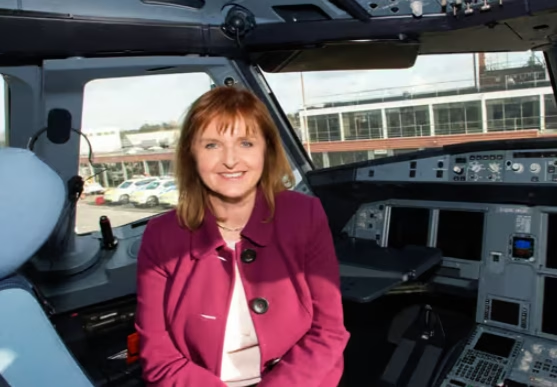
What 45 years in aviation taught me about leadership
Episode 17: Workplace Confidence Podcast
Where people professionals share the great work they do
What 45 years in aviation taught me about leadership - Ali Gayward.
What does it take to lead in an industry where decisions affect thousands of employees, millions of passengers and the future of an airline? And how do you maintain your confidence when you’re expected to have the answers, even when you’re not the expert?
My guest on the Workplace Confidence podcast is Ali Gayward, former UK Country Manager at easyJet, who recently retired after 16 years with the airline and a career spanning more than 45 years in aviation and travel.
Ali’s career has taken her from American Airlines to aviation consultancy and eventually to one of the UK’s best-known airlines. At easyJet, she was responsible for the profitability of the UK market and acted as the airline’s face and voice, dealing with everyone from cabin crew and colleagues to journalists, politicians and government officials.
We discuss the leadership lessons she’s learned along the way, from rebuilding confidence after redundancy to empowering employees, creating a culture of open communication and taking responsibility when decisions get difficult.
Listen now
Workplace Confidence PodcastListen to all episodes
Leading across an airline when you can’t know everything
As UK Country Manager, Ali describes a role that touched almost every part of easyJet’s business. She needed to understand commercial decisions about routes and airports, explain changes to employees and respond to questions from politicians and the media.
And that meant knowing a great deal about things she wasn’t personally responsible for.
I often hear from senior leaders who find this one of the hardest parts of their job. They’ve built their careers on being experts, but as their responsibilities grow, they’re expected to speak confidently about subjects they don’t work with every day.
Ali’s approach was to prepare thoroughly, understand why decisions had been made and never be afraid to ask for clarification.
“You must never be afraid of asking. If you’re presented with some information that perhaps you don’t understand, go to the people from whom it’s originated and say, ‘Explain this to me.’”
She also knew when to bring in the subject matter experts rather than try to explain everything herself.
What I take from Ali’s experience is that confidence doesn’t necessarily come from having all the answers. It comes from doing your homework, asking questions and knowing when someone else is better placed to explain the detail.
How redundancy changed Ali’s confidence
Long before easyJet, Ali spent almost 20 years with American Airlines before moving into aviation consultancy, helping airports develop their flight networks.
But when she was made redundant from that consultancy, her confidence took a significant knock.
She wondered whether she’d been good enough at her job. Then, as she told clients she was leaving, several said they wanted to continue working with her because they valued her expertise.
Those relationships helped her establish herself as an independent consultant, eventually opening the door to easyJet.
“You got to where you were by having done something right. It wasn’t all bad. So I think it’s really important that you focus on that.”
Ali also talks about seeking advice from others who’d experienced redundancy or set up their own businesses. Their guidance and encouragement were invaluable, and she advises anyone in a similar position not to become isolated.
Interestingly, she describes another potential confidence wobble when she retired, despite it being entirely her choice. Once again, people asking for her advice reminded her that her experience still had value.
Creating a culture where people feel valued
When Ali joined easyJet on what was originally a six-month consultancy contract, she found herself surrounded by highly skilled people. She admits it was daunting.
Fortunately, her manager trusted her judgement, backed her decisions and gave constructive feedback. Later, she worked with Dame Carolyn McCall, whose leadership left a lasting impression.
Ali recalls how Carolyn took time to get to know employees, remembered personal details and made a point of recognising good work.
Those experiences influenced how Ali approached leadership herself.
“I think empowerment, so enabling people to make their own decisions and backing them when they make that decision.”
One example involved communicating with easyJet’s geographically dispersed cabin crew. Rather than simply announcing commercial decisions from head office, Ali invited colleagues from departments such as marketing and network development to explain their work directly.
Ali wanted crew members to hear directly from the people behind the decisions, ask questions and understand the reasoning. It also gave those colleagues an opportunity to present their own work rather than have a senior leader take the credit.
Senior leaders made regular visits to airport bases, spending time with crew, listening to concerns and making themselves available for conversations.
But Ali emphasises that listening isn’t enough. Leaders need to explain what happened after employees raised questions or offered feedback.
For anyone managing remote or dispersed teams, there’s a practical lesson here about making leadership visible and ensuring communication works in both directions.
Taking responsibility when the decisions are tough
Ali faced some of her most challenging leadership moments during the pandemic, when easyJet had to close three UK airport bases, resulting in redundancies.
She had to explain those decisions to employees, politicians and local communities facing the loss of jobs.
It required preparation, empathy and the confidence to stand behind decisions that she hadn’t necessarily made herself.
“You have to show ownership in any decision that’s being made. And actually in those positions, sometimes it may not have been your own decision, but you have to take ownership for it, to appear credible.”
I asked whether taking ownership was a hallmark of good leadership.
“It’s critical. If you don’t own it, why would anybody respect you? And also, you need to be accountable for these decisions.”
It’s a particularly useful insight from someone whose job involved representing an organisation through difficult and sometimes unpopular decisions.
Leadership isn’t only about communicating good news. It’s also about being present, accountable and willing to answer difficult questions.
One leadership lesson worth remembering
Towards the end of our conversation, Ali recalls something her first manager at easyJet told her during an early performance review: people in the business really liked her.
After the knock to her confidence from redundancy, that simple piece of feedback meant a great deal.
What struck me about Ali’s career is how often confidence comes back to the people around us. Whether she’s talking about recovering from redundancy, learning from senior leaders or supporting cabin crew across the UK, she keeps returning to trust, communication and recognition.
After 45 years in aviation, Ali has plenty to say about making difficult decisions. But perhaps one of the most useful lessons is something much simpler: good leaders make sure people feel heard, understand what’s happening and know that their contribution matters.
More episodes

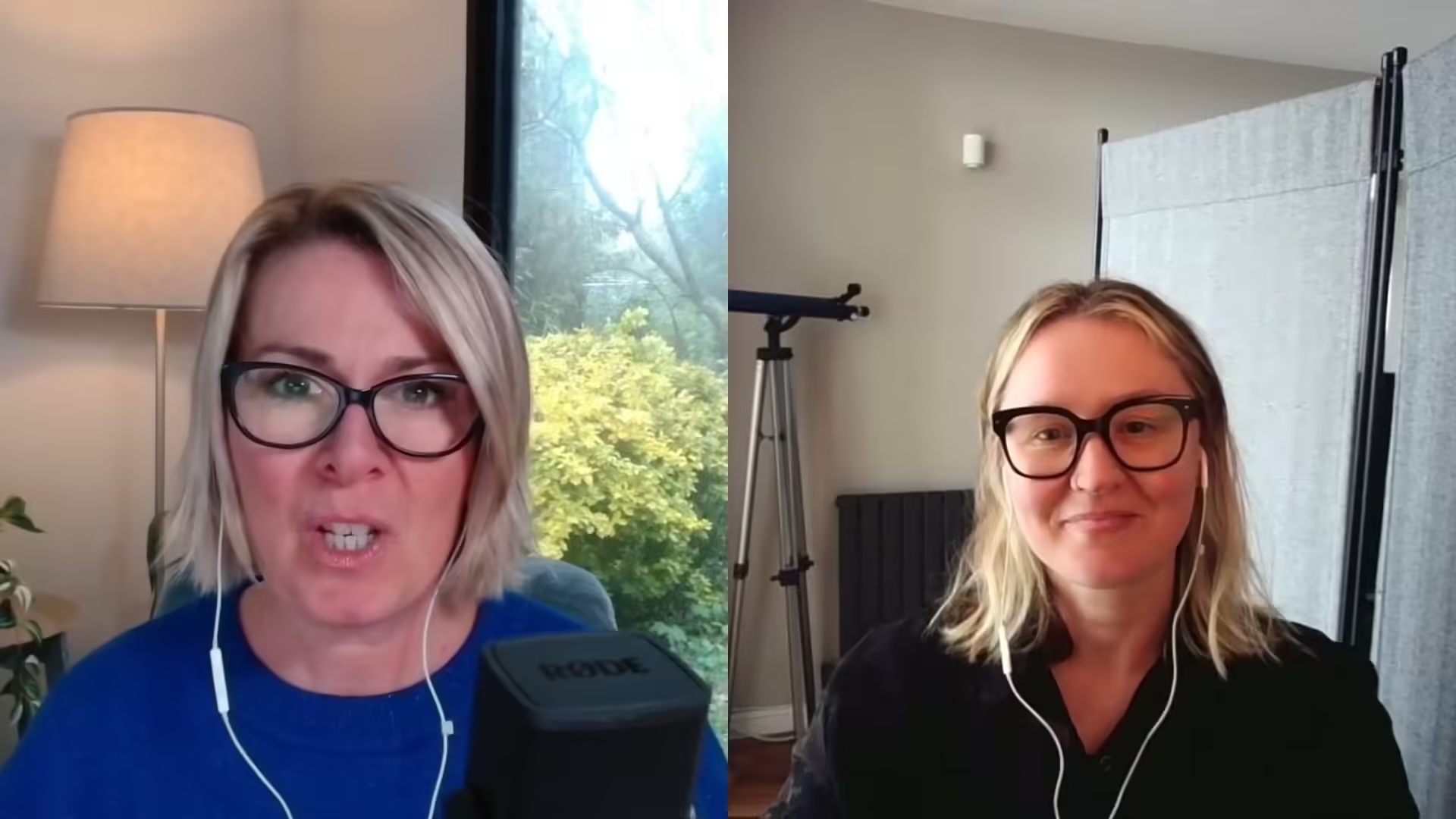


Transcript: Ali Gayward, former UK Country Manager at easyJet
Ali Gayward (01:46.956)
Yes, indeed, I once heard it described as a role within EasyJet that actually touched all areas, didn't necessarily own specifically any of them, but had to have an input into all of them. So I was country manager for the UK, also had some overseas markets, including Malta, Gibraltar, Israel, Iceland, and formerly when EasyJet flew to Russia, also Russia, which was a hugely interesting market. But really, it
In addition to having responsibility for all of the profitability in the market, particularly the UK, obviously, how many aircraft were allocated to which the airports, the routes that they flew and how to make them profitable. But I was also the face and voice of EasyJet both internally and externally in the UK market. So lots of work with media, with politicians, with governments.
but also out in the market understanding what was going on in the market, what the industry trends were, where developing markets were, where EasyJet should be flying to, and perhaps even markets that were no longer so attractive for people to go to, because people do change what they want to do all of the time. So it's completely keeping in touch with that and feeding that back into EasyJet headquarters so that we could all make decisions about what to do with the aircraft.
But also it was talking to our people out in the market. So our crew who work in the bases in the airports around the UK, so that they understood firstly why decisions that were being made were being made and the decision making process behind that. also so that their feedback, their views, their concerns, their opinions were also being fed back into easy head office. Bit of a two way communications conduit if you like.
Penny (03:41.794)
Wow. So if I was to say you were a master of all, a jack of all trades and master of none, would that be rude of me?
Ali Gayward (03:51.34)
No, no, I think it's a great way to describe it. I was always the master of revision to make sure I did know about what I was talking about, but sometimes, you know, perhaps not having the technicality behind some of the decision making process, but understanding why it was and also so I could explain why it was being made. But equally, it was to feed information into those decisions.
Penny (04:14.188)
A lot of leaders I work with, Ali, say that the hardest bit of their job and where they feel least confident is when they are having to summarise and share information that they're not up close to and look.
good doing that and press the point and answer questions and things like that. And it makes them feel terribly, terribly unsure of themselves. You're not a subject matter expert anymore. You're a leader who needs to know about many things. And was that the case for you? And did you polish those skills? Did it become easier as you went along?
Ali Gayward (04:52.074)
Well, I think you can never be complacent about your knowledge. And I think particularly when you have to share that knowledge with third parties, be it other employees or with external people, you really do need to understand the basics of why those decisions have been made and the process behind making that decision. So you have to do an awful lot of research, but to understand completely different areas. It could be from...
why route network decisions have been made, why the airline is choosing to fly to a particular destination or indeed cancel flying to a particular destination, down to understanding some of the sustainability initiatives and why perhaps certain, know, should the airline be moving to hydrogen powered aircraft or using sustainable aviation fuels. So hugely widespread and you had to have an understanding of everything.
Penny (05:46.734)
There's a little bit of a tickle of something happening on the desk, perhaps. Is it maybe a wire that's touching the desk or a bracelet or a watch strap or something like that? I can hear Ali just occasionally.
Ali Gayward (06:00.155)
sorry, yes, it could be a bracelet. Right, got hold of it now.
Penny (06:02.67)
I know, I know this. I'm very good with my sounds. Was there a brace? Is it gold? Because I can sense that, there you go. Perfect. Okay. Thank you very much. So actually, that confidence came from being, you know, doing your research, understanding the topics, you know, ever on the back foot.
Ali Gayward (06:09.629)
Yes. Yeah, that's a gold bangle. Safely tucked up a sleeve.
Penny (06:31.65)
I think it's that feeling of being on the back foot, which a lot of people experience, isn't it, when they're representing other aspects of the business that isn't theirs, perhaps. Sounds like you got used to it incredibly well and had your workarounds for it. And I suppose that was your full-time job, was to know the business without being in the business all the time.
Ali Gayward (06:49.426)
That's right, and you must never be afraid of asking. If you're presented with some information that perhaps you don't understand, go to the people from whom it's originated and say, explain this to me. Because typically, if you're having to share that information with a third party, it's also really important that you explain it, perhaps in layman's terms.
It's not just the technical information. But I think also that there are opportunities where sometimes I may not have been the best person to share that information. Sometimes I really need to pull in that subject matter expert and there were times where that was hugely appropriate.
Penny (07:26.476)
Your long career in aviation with American Airlines and then as a consultant with a consultancy firm before EasyJet, you know, it was well established. But when you got made redundant from that consultancy, you had a big knock to your confidence, didn't you? Can you tell us a little bit more about that?
Ali Gayward (07:49.482)
yes, very definitely. I think whenever anyone is made redundant, for whatever reason it is, you think, well, yeah, I must have been weak at my job. There is a reason why it's me that they've let go. And absolutely, it knocks your confidence. But the experience that I had on the day that I was actually leaving, and as anybody who's been in a customer-facing role will know, you obviously build relationships with your customers.
and when you leave you should let them know that you're leaving and what's going on. And what really, really astounded me is as I was leaving these people came to me and said, well actually we'd still like to work with you, Ali Gaword, because it's your input that we value. How can we take that forwards? And it was actually then as a consultant that I ultimately moved to EasyJet after a couple of years of consulting in my own right.
The beauty about being in any consultancy role is it gives you a very widespread knowledge because again you are touching lots of different areas, lots of different projects and so you acquire a huge amount of knowledge and through my time at the consultancy, my having come from predominantly a business travel background, sales in business travel to
start working in perhaps the cargo arena or the low cost arena or airport development and understanding the airport side of the business. You my knowledge increased hugely in so many areas.
Penny (09:19.982)
So that kind of wake up call or disturbing moment in time when you're made redundant, what did you do to help rebuild? I mean, it was lovely to hear from customers saying, on, work with us. We still want to work with you. Can you still continue to help us? But there must have been a time that was a lull in that kind of timeline between helping you rebuild your confidence. What did you do? Can you even remember back then what you did?
Ali Gayward (09:48.118)
No, no.
Penny (09:48.258)
to look after yourself and to recover, bounce back.
Ali Gayward (09:53.059)
Well, I think one of the really important things is to think back over the strong points of what you've done. You you got to where you were by having done something right. It wasn't all bad. So I think it's really important that you focus on that. Learn from your mistakes. I really, really did because I think it was terribly important. Had I not done, think I could very easily have allowed myself to be cast aside. But it's really important also to reach out to people who
Penny (10:07.253)
Did you do that?
Ali Gayward (10:22.722)
you know, perhaps have been in the same position. People are always very keen to help you if they've been through that themselves. Without a doubt, without a doubt from a number of people who'd left perhaps by their, you know, by their own choice and decided to set up on their own or through redundancy had set up on their own, lots of guidance, lots of support, even just, you know, a friendly face to chat through, to chat to through it all.
Penny (10:28.046)
And did you find that help, when you reached out? Yeah.
Penny (10:49.972)
Mm. So you didn't feel too much, didn't feel too much on your own.
Ali Gayward (10:51.968)
was incredibly helpful.
No, it's really important that you don't allow yourself to become isolated. Surround yourself with people who can help you, support you and encourage you every step of the way.
Penny (11:04.704)
Yeah, yeah, brilliant. I mean, you found comfort and confidence at EasyJet eventually after being a consultant's freelance for a few... Sorry, this is sounding a bit like, this is your life, isn't it? I should have a red folder and like leap out and go, Ali Gaword, this is your life. I know that after your time as a consultant, you got your job with EasyJet.
You've been with them for 16 years. How did your confidence or your self-belief, your self-feelings of self-worth, how did they work for you over that time? And did by the time you retired just recently, from that role anyway, how did you feel compare and contrast the start and the end of that career?
Ali Gayward (11:55.698)
When I very first joined EasyJet, well, I actually joined as a consultant. was hired on a six month consultancy basis. And then they never let me leave the office. I worked for a wonderful manager at the time who had hired me, who gave me a huge amount of confidence again. But I think, you know, when I look back to my first
Penny (11:59.266)
Right.
Penny (12:06.232)
haha
Ali Gayward (12:20.563)
My first week, my first couple of weeks, I was astounded at the huge amount of intellect and skill I was surrounded by. And, you know, that was quite daunting in some ways, because I think when you've been out on your own, you're not necessarily up to date with some of the changes and some of the skills that are out there. So I was hugely impressed by everybody I worked with. But I had, as I say, this amazing manager who, you know, he trusted me.
to do what I had been hired to do. He backed me every step of the way. He told me if I was doing a good job when I was doing it, if there were things that maybe he thought I should have done differently. He had a great way of saying, did we get the outcome that we wanted? Perhaps, what would you have done differently on reflection? And so I learned through it. But then I worked for a number of amazing leaders, including that.
Chief Executive who came into EasyJet just after I joined as a consultant actually Dame Carolyn McCall and I think she was one of the most inspiring leaders I've ever worked for. She took the time to get to know everybody within the company and she'd remember the tiniest little fact about you, know what your children were called, what you did before, some of your achievements and never
failed to the opportunity to let you know when you'd done a great job and would follow up and let other people know when you'd done a really good job. She was just awesome.
Penny (13:52.792)
Wow.
So that must have really galvanized you, just sort of big sigh of relief really when you're in that situation where you're being supported, you're being developed as well, even though you are a senior, you're being developed by the people around you. Your confidence must be sky high right now, is that right?
Ali Gayward (14:17.149)
And you know what, Penny, when I actually retired, I think that's another time when it could be very easy for your confidence to be hit. You think, have I got a lifetime of jam making and knitting ahead of me? Have I been choosing to retire? Because it was absolutely my choice. But you then start to think, have I almost been cast aside by the working world? There is a real... Indeed, indeed.
Penny (14:41.166)
by society. Yeah.
Ali Gayward (14:44.253)
But again, know, when I retired, people reached out and said, actually, Ali, we'd like you to do this for us, and we'd like your advice on this. So that again gives you confidence and it's then finding the right lifestyle balance between the retirement that we've all worked for all of our working lives, but also keeping the old brain cells going and doing the stuff that in the business that I have loved all of my working life. And indeed, the industry I'd wanted to.
to work in since I was a young child.
Penny (15:15.566)
have you learned then from the leaders that you've worked with and what did you put into practice yourself with others about how to make people or enable people to build their confidence and feel that value, you know, valued and supported? What practical aspects are there of that leadership skill?
Ali Gayward (15:38.075)
I think empowerment, so enabling people to make their own decisions and backing them when they make that decision. But also, I think it's terribly important that you allow people to take the credit for the work that they have done. I think it's very easy as a leader of people to ask for input into various projects or presentations or things like that. But nobody can explain the workings of a project better than the person who has done all of the work.
And one of the things that I had to do as part of my role within EasyJet was speak to crew on a regular basis, this absentee workforce, they didn't necessarily understand why decisions were being made and how the decisions had been made. So I'd pull in people from, for example, our marketing department or the network development team or perhaps revenue management. You know, they would pull together all of the information to share with the crew.
But most importantly, I asked them to present it and therefore the crew would be dialling in during their days off, so doing this in their own time, but allowing them to ask questions directly to the person who had pulled the work together just made, if you like, both sides, both the crew and the people who presenting, feel so much more engaged.
Penny (17:00.812)
because they were eyeballing each other and understanding each other rather than it just being a top down, this is what Ali says is happening and we've all got to go along with it. Okay.
Ali Gayward (17:09.064)
That's exactly it. The crew would understand why decisions were made, what routes we were planning to fly, why we were going to go there, what routes we had dropped and why perhaps customer demand for that route was no longer attractive, the route was no longer commercially viable, why we were choosing to advertise in the publications we were choosing to advertise in. I think it's very easy for the public to see airlines perhaps spending
vast, vast amounts of money on television advertised, but it might not be the greatest return on investment all of the time. So explaining that to everybody, but then equally allowing those remote employees to ask questions. I think the other key thing is if people ask questions in an environment like that. And as a crew member, for example, you may not feel terribly confident about questioning a decision to a senior manager, but if...
Penny (17:58.99)
Mm.
Ali Gayward (18:07.704)
The important thing was to listen and to feed back to them following that meeting about what the ultimate decision was so that they do feel that their view has been valued.
Penny (18:19.17)
So on the leaders and managers front, how do you get, do you think, people to do that, to action that and to remember to do that? Is it part of culture and this is how we do things around here? Or is there instruction when you join EasyJet that, you know, we listen and we act and then we feedback and we let people know and follow up? How did it work for EasyJet in that way? Because it's very practical, it's easy to say, isn't it? It's more difficult to get people to do this.
Ali Gayward (18:46.209)
When I first joined EasyJet, it had a very flat management structure. It was not hierarchical at all. I think as the airline has grown over the 16 years, then obviously more layers have been added. But even so, there was always that decision of you go away, you make your decision, you stand by it, you explain your decision. But there has always been that environment of open communication. We have management teams based out in all of the airports supporting all of the crew.
There was very much a drive that senior managers would spend days working in all of the airports in the crew room within the airport. And it was, you you are there, you are working in the midst of the crew, you are there to answer questions. Myself, along with my counterparts and other senior management, including the chief executive, we'd schedule these base visits all the time. We'd go down to the aircraft to meet crew when they were in between flights, just to say,
What do you want to know? What can I tell you? If you are flying on a flight, going on a business trip or even on holiday, make a point of letting yourself know and go and stand with the crew when they're having their own rest break to say, what can I tell you? What do you want to know? How is everything? So I think that's terribly important. There was a real culture of trying to open that two way communication at EasyJet.
Penny (20:07.49)
That culture then is really visible, isn't it? If you've got people meeting and greeting you and you fly out and then you fly back, that's a way to look after a remote or absentee workforce, isn't it? It's probably something that's lacking in many organizations now that people work from home or out in the field a lot. There's not that extra care that's taken, but really important in the airline industry, obviously. But what do you think that gave those individual crew members?
a feeling of when they returned after a tedious flight with some, you know, stag parties or, whatever the hard flight has been. How do you think it helped them? What facets of support were in place, do think?
Ali Gayward (20:52.926)
Well, just to put things into context, when I think it was just before the pandemic hit, EasyJet took the decision that crew, when they were reporting for duty for their flights, rather than coming to the central crew room where the management team were, they would report directly to the aircraft that they were going to operate. And then the six crew members would sit together, get all of their briefing done. So, you know, they truly could be an absentee workforce.
you know, come in, fly their flight and then go home at the end of their shift. So it's really important to let them know that the crew support managers were always available throughout the entire shift that any crew were working in the base offices. The doors were always open so that, you know, if they'd had a tough flight for whatever reason or had anything going on in their personal lives that they needed help and support with, there was always somebody that they could talk to.
And it's been something that I think has provided crew members with an enormous amount of support, particularly since as a, you know, it's very easy for people to look at crew and not to engage with them. So I think they've realised that they really are part of the Orange Spirit, as we always call it at EasyJet, the Orange family.
Penny (22:08.066)
The Orange Family, The Orange Spirit. Obviously that has new connotations with the orange one over in the States in the White House perhaps as he often gets referred to, the orange man. The Orange Family, The Orange Spirit. Of course the interesting color of EasyJet is bright orange, the brand. That sense of belonging must feel very nice. Were you sad when you retired then from EasyJet or was it?
Or was it okay? Had you done your work and added your worth?
Ali Gayward (22:41.713)
The day I actually left, I broke my heart. It really did. I absolutely loved every single day I worked there. I used to come home from work at the end of the night and think I'm the luckiest person in the world. I've got the best job in the world. Yeah, there were days that were tougher than others, absolutely. But it's a culture that you see amongst EasyJet employees too. And when we were going through hiring processes for any roles, you'd look at, you
Penny (22:45.464)
Holly.
Ali Gayward (23:11.62)
the technical skills, the abilities that you looking for in a particular role. But one of the key deciding factors in when somebody was successful or not is did they display that orange spirit? Were they the right type of person to work in the very fast pace, but very fun EasyJet environment? And that was something that the EasyJet's founder, Stelios Hadjianou, that he instilled in the company from the word go and it still exists there today.
Penny (23:37.816)
Wow, incredible. Well, what an incredible career and one that you need to have confidence, you need to at least display confidence in, in order to fly. But also it sounds like you thoroughly needed to feel it as well in order to press the point and get your message out there to that huge range of different stakeholders, if you like. Just one final question. I think a lot of people would want to know from you.
You you've held the senior role with a lot of responsibility in it. there been times when you didn't feel that confident but have had to act it anyway? Can you take us to a time like that? okay.
Ali Gayward (24:19.243)
Lots of times. Some of the media interviews could be really tough. think, and then it's really important, firstly, as I mentioned before, absolutely need to have done your revision. I was in a very fortunate position where I was always well briefed ahead of a media interview, but I think you also need to put yourself on the side of the person that's interviewing you from the media. They're not there to catch you out.
They truly do want to ask genuine questions and you probably know an awful lot more about the subject matter than they do. But I think also, you know, through the pandemic, sadly, we had to make some really, really very tough decisions as a result of the impact on, you know, flying having been stopped and we had to close three of our airport bases in the UK with all of the very sad redundancies that that led to.
and I had to undertake obviously a lot of discussion with crew over why the decisions were being made, but also local politicians because obviously they could see jobs going, the impact on the local economy. Some really, really tough decisions. firstly, I think you need to put yourself in the position of the person that's asking you the questions. You have to show empathy.
Penny (25:22.67)
Mm.
Ali Gayward (25:39.521)
but you need to be able to explain things in the way that people will understand and not be seen to pass a buck. this is someone else's decision. I'm just relaying the information. You have to show ownership in any decision that's being made. And actually in those positions, sometimes it may not have been your own decision, but you have to take ownership for it, to appear credible.
Penny (26:00.078)
Do you think that's a hallmark of a good leader is taking ownership of the information? It's so easy just to pass the buck, isn't it? And say, yeah, this has come from on high. We're all having to do this now. It's got nothing to do with me, Gov. It's important, isn't it, to own it and yeah, right.
Ali Gayward (26:15.892)
It's critical. If you don't own it, why would anybody respect you? And also, you need to be accountable for these decisions. You probably have had some input somewhere along the way. I think it's very, very easy to hide behind someone else's ultimate decision. to be believed to be valued, you need to take ownership. It's not easy. It's not easy, but you must do it.
Penny (26:38.945)
Interesting.
Penny (26:42.88)
Ali, you're a masterclass in leadership and communication. I've known you for years, but only in one aspect of your work, which is to turn up as a panelist on panel discussions. So we've met a couple of times and I've followed you on LinkedIn and just think you're such a wonderful, wonderful leader. What was it that encouraged you? There was a phrase that you told me about,
where someone said people really like you and that's what we need. that right? Is that something that you were told and helped boost your confidence?
Ali Gayward (27:18.923)
Absolutely, when I first joined EasyJet and obviously I'd had the knock along the way from having been made redundant a few years previously and you know I came to my first early review with my then manager and we were talking about the work that I'd done and you know some tough things that I'd had to do and he said the important thing is people here really like you Ali and you know there's nothing better to hear because you know to make your job easier you want to have
allies all around you.
Penny (27:51.874)
That feedback is important and often goes missing, doesn't it, from the mouths of managers and leaders? So simple to do, to tell someone how they're coming across and the great stuff about them that works really well. And yet that often gets overlooked, daft, isn't it? But I'm glad you heard that because you are super likable and it's been lovely interviewing you for the Workplace Confidence podcast. Thanks, Sally.
Ali Gayward (28:17.844)
Penny, thanks very much indeed for your time. Thank you.

Finalist
Personnel Today
Learning and Development Supplier of the Year
2025
Finalist
Personnel Today
Learning and Development Supplier of the Year
2024
Finalist
Business Book Awards
Short Business Book
of the Year
2023
Finalist
Lloyds Bank Business Excellence Awards
Business Enabler
of the Year
2022