HR Grapevine - Article by Penny Haslam

HR Grapevine – From No. 10 to your office – managing the anxiety of a new leader

Article summary – HR Grapevine – From No. 10 to your office: managing the anxiety of a new leader

A new leader arriving at the top of an organisation can create excitement, but it can also trigger uncertainty, anxiety and speculation. Employees quickly begin looking for clues about what will change, which priorities will matter and what the appointment could mean for them.

In this HR Grapevine article, contributors explore how HR can help organisations manage a leadership handover without allowing uncertainty to damage trust, morale or performance.

Using a change at Number 10 as its starting point, the article draws a parallel between political transitions and the leadership changes taking place in workplaces every week. A handover may involve one person at the top, but its impact quickly travels throughout the organisation.

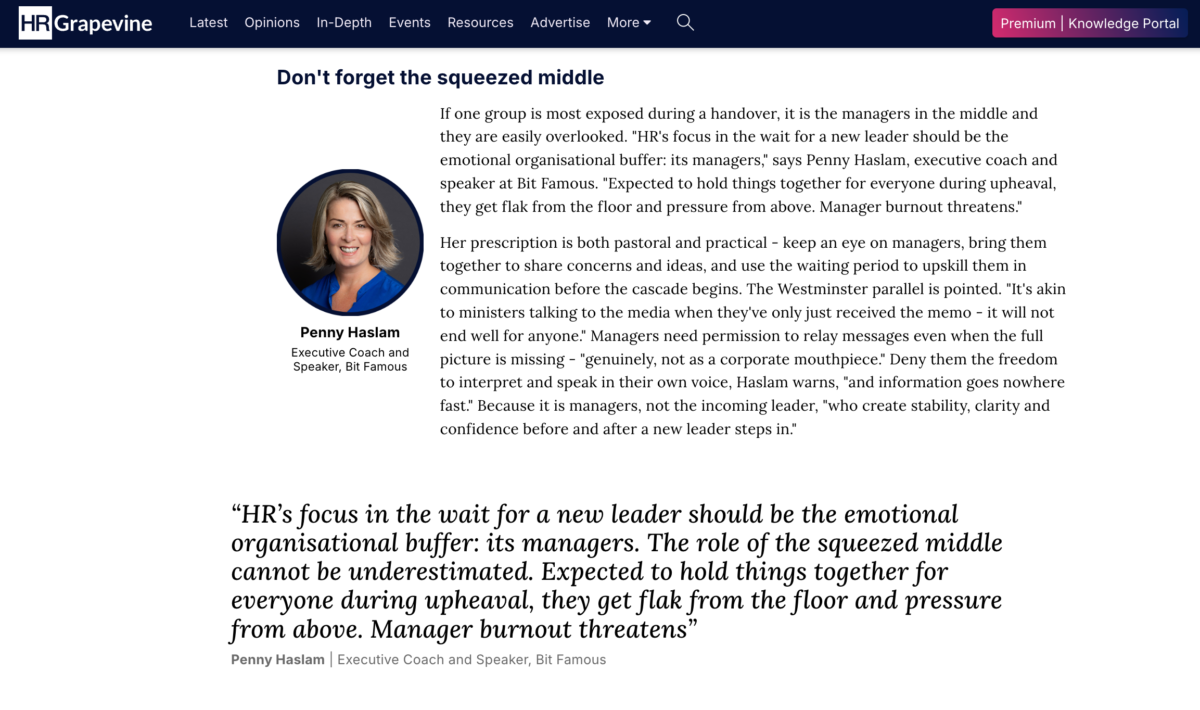
Bit Famous MD Penny Haslam focuses on the people often left carrying the greatest burden: middle managers.

She describes managers as the organisation’s emotional buffer. During periods of upheaval, they are expected to reassure employees, answer difficult questions and keep work moving, while also managing pressure and expectations from above.

Without the right support, this can leave managers exposed to stress and burnout.

Penny argues that HR should use the period before a new leader arrives to check in with managers, bring them together to share concerns and strengthen their communication skills before important messages begin moving through the organisation.

She also warns against expecting managers to act as corporate mouthpieces. They need the freedom to communicate in their own voice, acknowledge when information is incomplete and respond honestly to the concerns of their teams.

As Penny points out, asking managers to communicate before they understand the message is like sending ministers out to face the media when they have only just received the memo. It is unlikely to end well.

The article is a reminder that incoming leaders may set the direction, but managers create much of the day-to-day stability, clarity and confidence employees need during a period of change.

Read the full article featuring Penny Haslam, Bit Famous, in HR Grapevine.

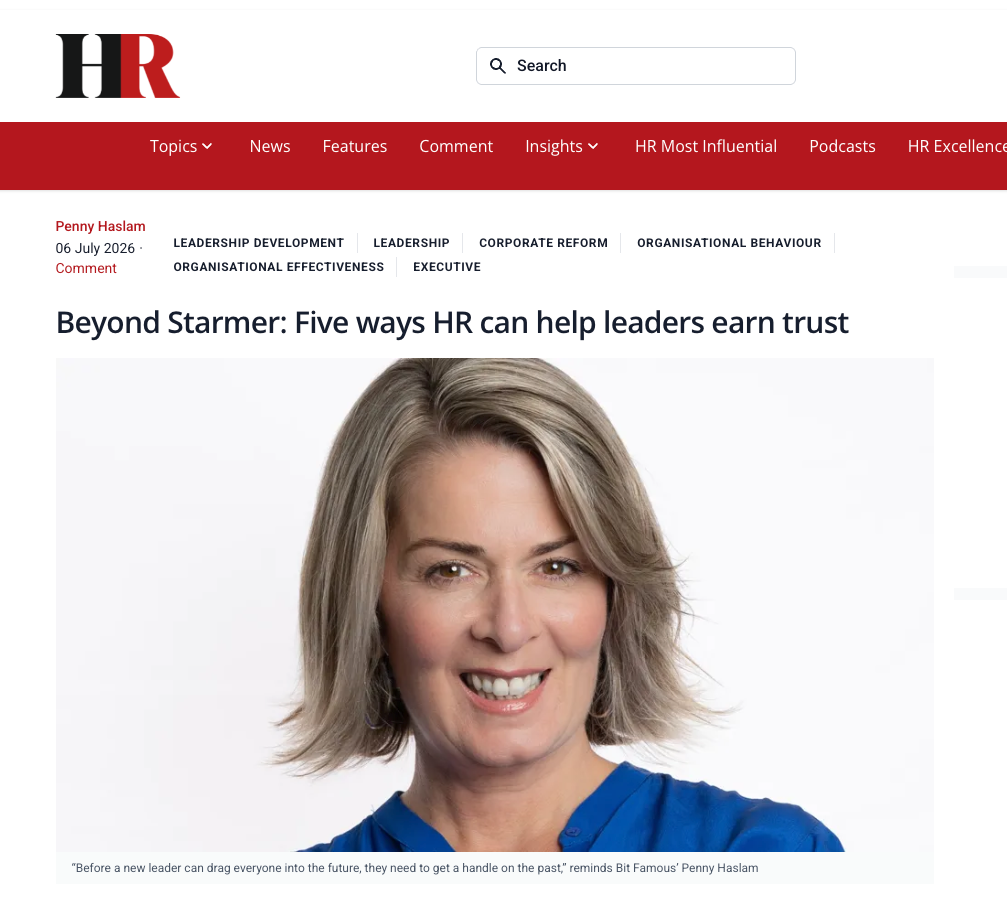
HR Magazine - Article by Penny Haslam - Beyond Starmer: Five ways HR can help leaders earn trust

HR Magazine – Beyond Starmer: Five ways HR can help leaders earn trust

Here’s a fuller version with more of the article’s argument and practical value:

A new leader may arrive with a clear brief, plenty of energy and an ambitious vision for the future. But if they step into an organisation shaped by change, conflict, disappointment or low trust, charging ahead too quickly can do more harm than good.

In this HR Magazine article, Bit Famous MD Penny Haslam explores the critical role HR can play in helping leaders earn trust from the moment they arrive. Her argument is simple: before a leader can take people forward, they need to understand what those people have already been through.

That means briefing them on more than the structure, strategy and performance figures. HR can help them read the emotional weather of the organisation, recognise where trust has been damaged and understand which issues need acknowledging before people will be ready to listen.

Penny sets out five practical ways HR can support a leader through those first vital weeks. These include helping them understand the mood of the workforce, shaping messages that speak to both the heart and the mind, preparing them to handle difficult questions without hiding behind corporate language, and equipping managers to continue the conversation across the business.

She also makes the case for genuine visibility. Trust is not built through a single launch speech, staged photo opportunity or carefully scripted town hall. It grows through repeated, everyday moments: site visits, team meetings, corridor conversations, video calls and honest answers to awkward questions.

The article is a reminder that leadership communication is not simply about saying the right thing. It is about listening properly, understanding context and showing people that their experiences have been recognised.

For HR, this creates a valuable opportunity. By helping new leaders communicate clearly, appear consistently and respond credibly, people professionals can give them a far better chance of building trust, stabilising the organisation and taking people with them.

Five steps: Stop senior meetings ending in agreement but no action

HR Zone – Five steps to stop senior meetings ending in agreement but no action

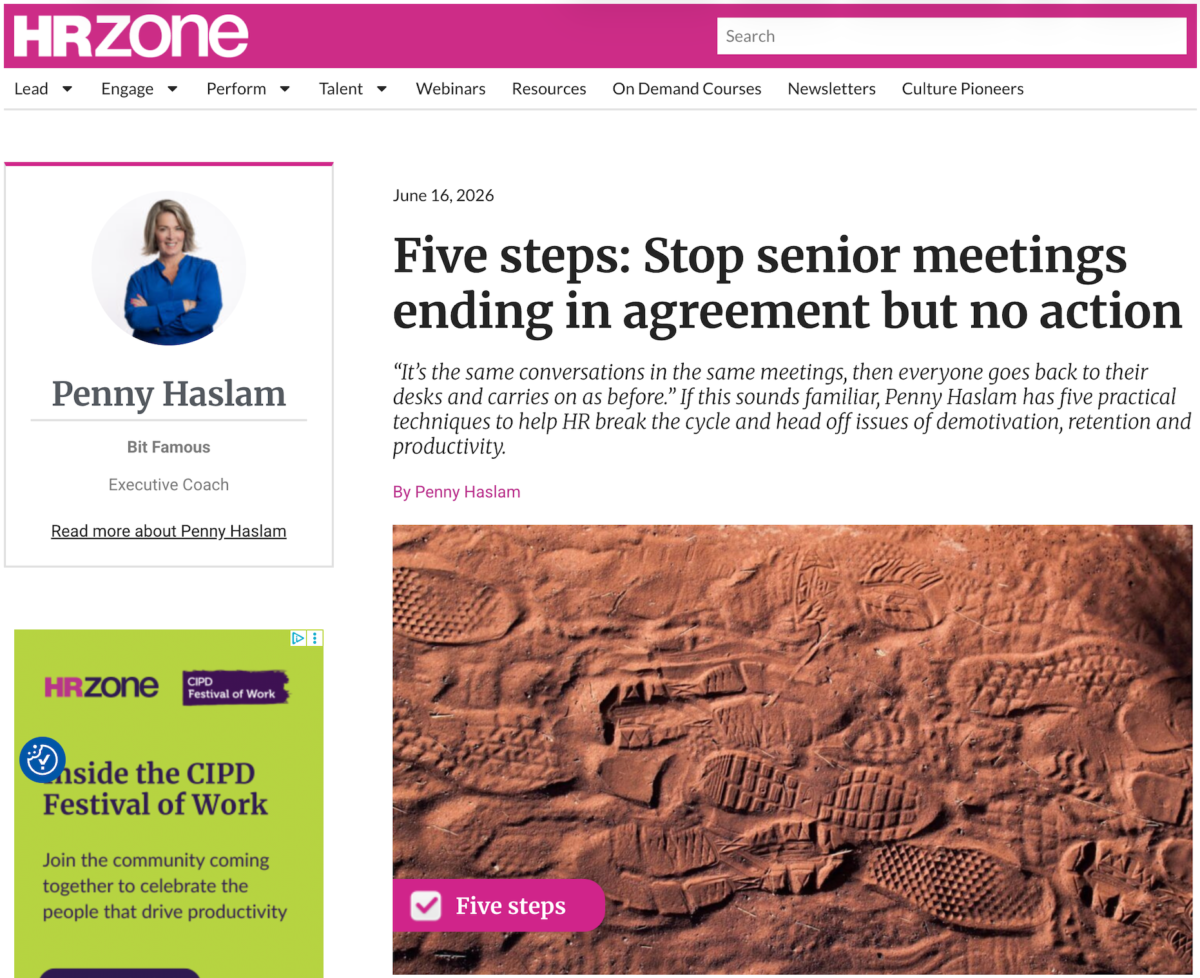
Senior meetings often seem productive at first. People agree, nod along, and it feels like everyone is on the same page. But once the meeting ends, nothing actually changes.

In this HR Zone article, I look at why so many senior meetings end with agreement but no real action. The problem usually isn’t a lack of intelligence or good intentions. Instead, leaders often get stuck in habits that keep discussions polite, passive, and going in circles. Updates take the place of decisions. Data stands in for judgment. Questions are used to score points instead of helping the work move forward.

This matters to HR because when leaders don’t act, frustration spreads throughout the company. If people don’t see strategy turning into real action, engagement falls and the familiar “all talk, no action” culture starts to take hold.

I offer five practical ways to break this cycle: shape agendas around questions and decisions, connect information to purpose using “so we can” phrases, share a clear personal view, guide Q&A sessions, and repeat key messages until they stick.

Even small changes in how meetings are planned, led, and followed up can have a big impact. With more focused communication, senior teams can make decisions faster, give clearer direction, and turn agreement into real action.

Bit Famous in the media - Training Journal

Training Journal – Can you teach self-belief?

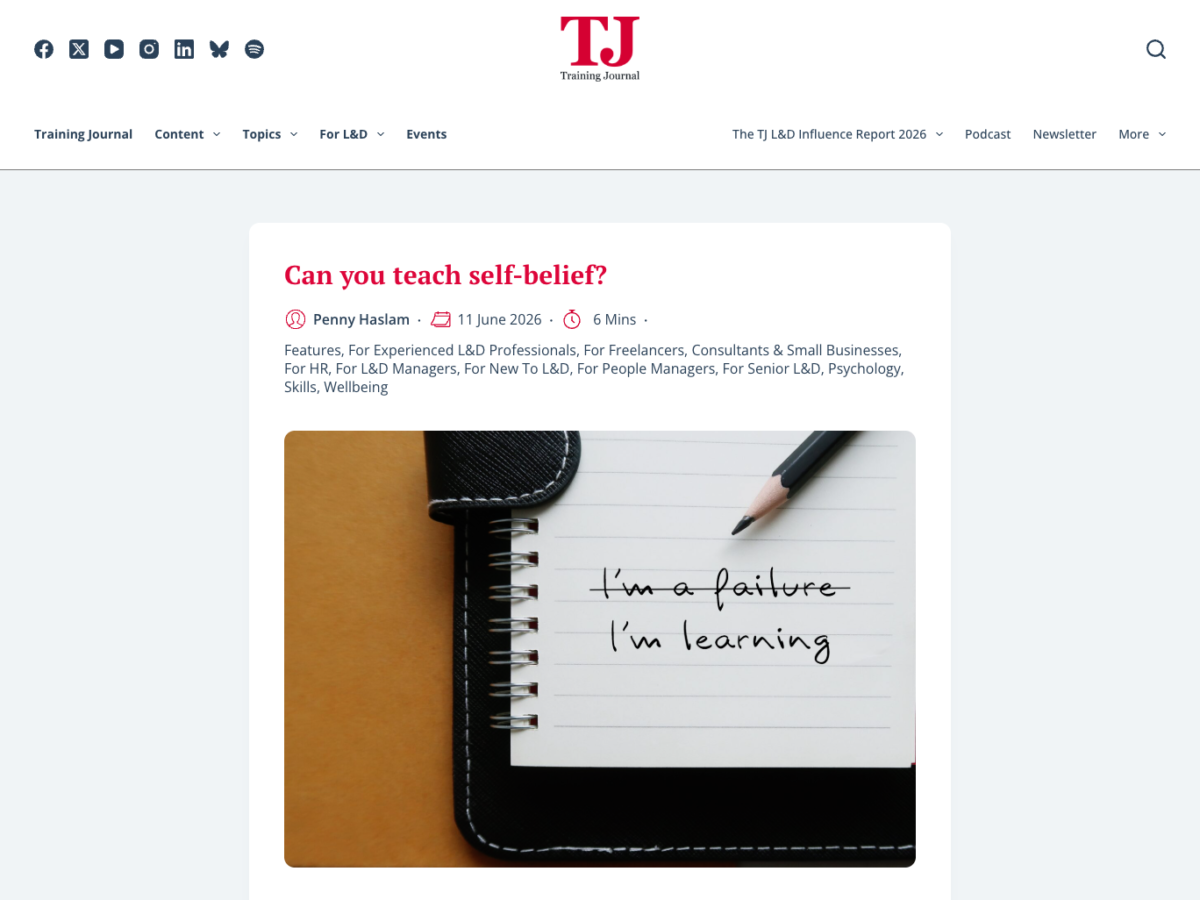
Can you teach self-belief? Penny Haslam’s answer is a firm yes, but not by handing people a motivational mug and hoping for the best.

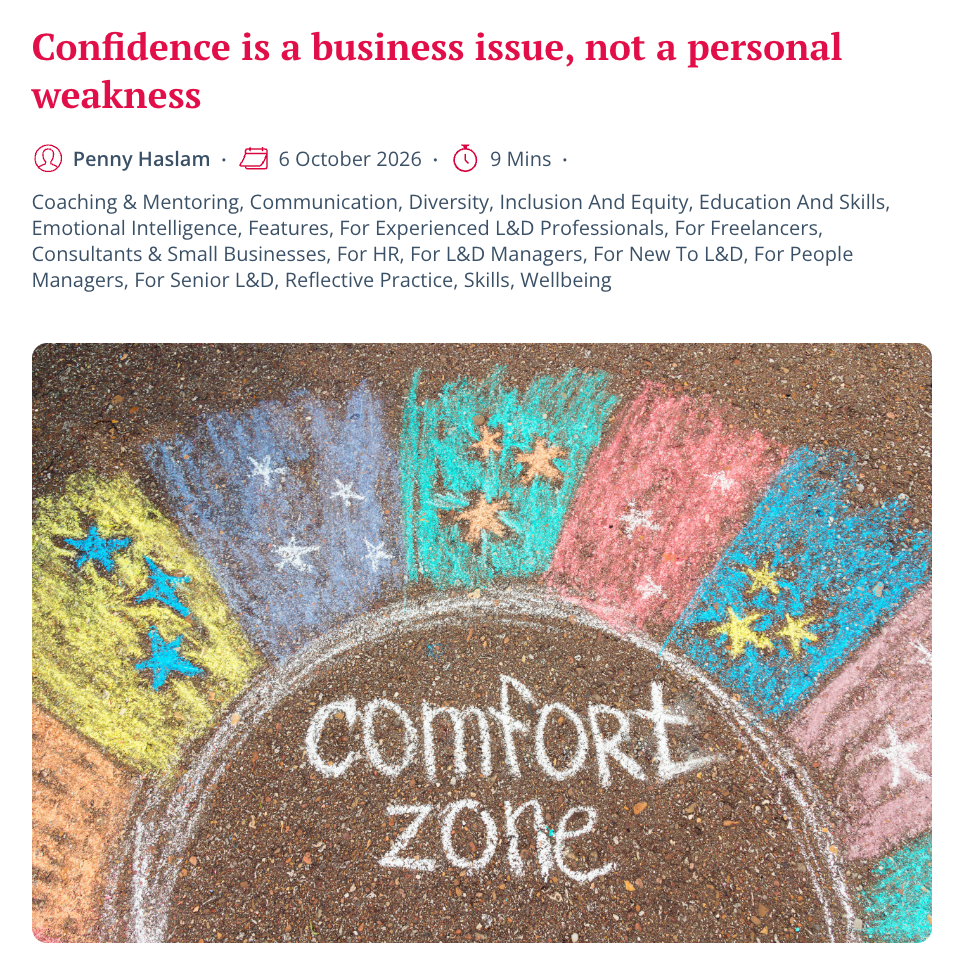
In this article for Training Journal, Penny challenges the idea that confidence is something you either have or you don’t. Confidence moves. It rises and falls depending on the meeting, the audience, the feedback and whether your inner critic has decided to do a full PowerPoint presentation in your head.

Penny opens with a personal story from her BBC days, when a senior manager’s brutal comment knocked her self-belief sideways. It sparked a long-standing interest in how confidence works at work, why it disappears and how people can rebuild it when it takes a hit.

The article then shares research carried out with Northumbria University’s Organisational Psychology Department into Penny’s 90-minute Building Workplace Confidence session. The results showed measurable gains, including a 12% increase in confidence, a 14% rise in job satisfaction and a major shift in people’s ability to challenge limiting self-beliefs. Before the session, only 16.4% of delegates felt able to question negative beliefs about themselves. Afterwards, that figure rose to 89.4%.

But Penny is clear that confidence training only sticks when the right conditions are in place. People need a personal commitment to practise, support from managers and colleagues and regular reminders that keep the learning alive in real work situations.

The piece also shares three practical tools: ICE, which helps people challenge negative self-talk; “yet”, which turns limiting beliefs into possibilities and Val-Yous, a way of using personal values to guide action under pressure.

The big message is simple: confidence is not a fixed personality trait. It is a workplace capability. With the right tools, support and practice, people can build it, use it and pass it on.

Bit Famous in People Management publication

People Management – How can the BBC utilise the ‘outsider advantage’?

When a senior outsider walks into a big leadership job, people don’t always roll out the bunting.

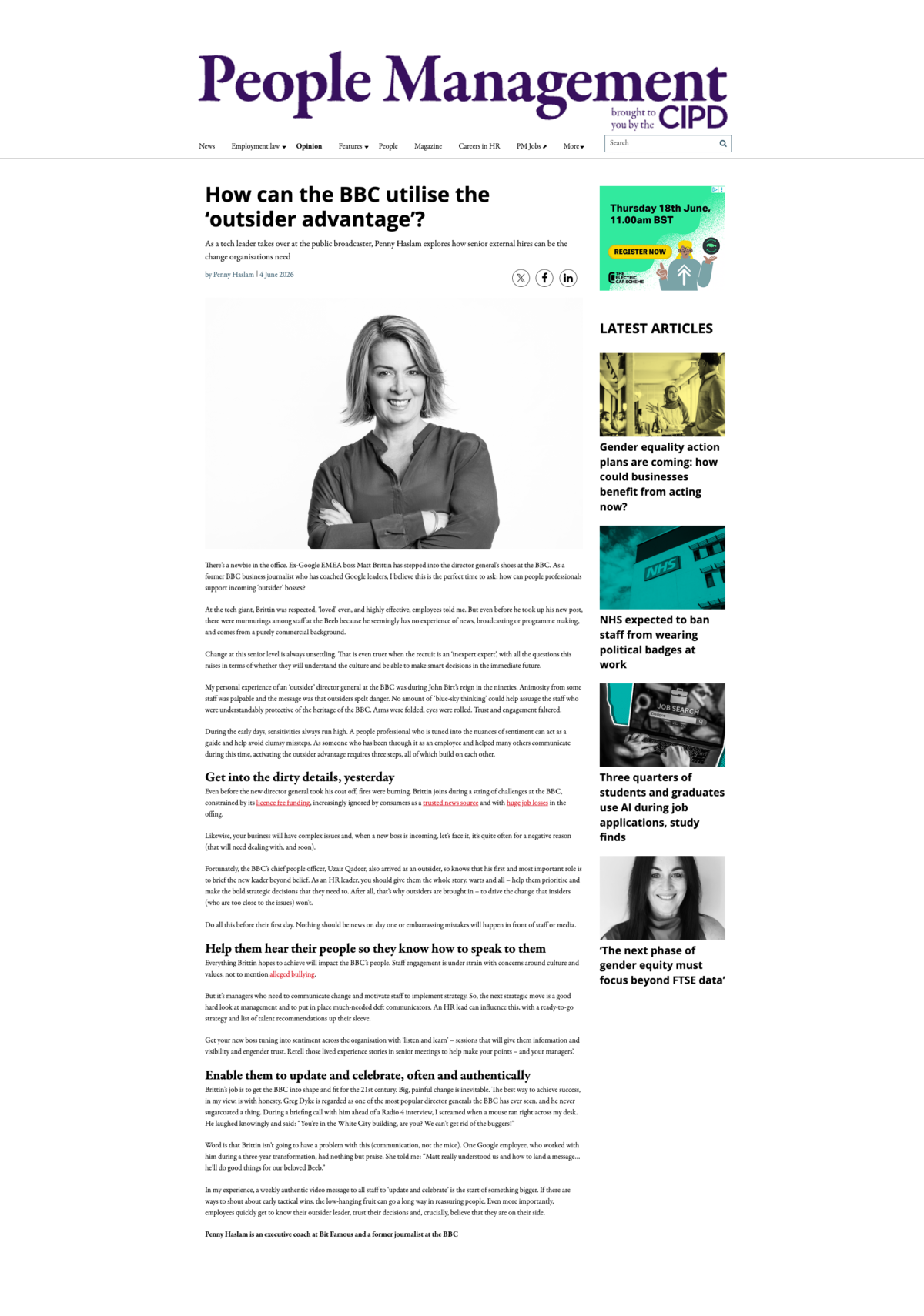
In this article for People Management, Penny Haslam looks at Matt Brittin’s move from Google EMEA to the top job at the BBC and asks a useful question: how can organisations help an external leader land well?

Penny brings two perspectives to the piece. She is a former BBC business journalist, so she knows how protective people can feel about the Beeb. She has also coached Google leaders, so she understands why Brittin’s commercial and tech background could bring real value.

That mix is the heart of the article. Outsiders can see things insiders have stopped noticing. They can ask awkward questions, challenge habits and make bold decisions. But they can also trigger folded arms, rolling eyes and a quiet chorus of “what do they know about us?”

Penny argues that this is where people professionals have a crucial role to play. The outsider advantage does not happen by magic. HR and people leaders need to help the new boss understand the organisation before they start making pronouncements from the top floor.

Her advice is practical. Brief them properly before day one. Not the shiny induction version, but the real one: the tensions, the history, the sensitive issues and the things everyone knows but no one writes down. Then help them listen to employees so they understand how change feels on the ground, not just how it looks in a strategy deck.

Finally, Penny makes the case for regular, honest communication. People need to see and hear from a new leader often, especially when change feels uncomfortable. A weekly update, a few early wins and a bit of genuine personality can go a long way.

The message is simple: outsider leaders can be exactly what an organisation needs, but only if they earn trust before asking people to follow them.