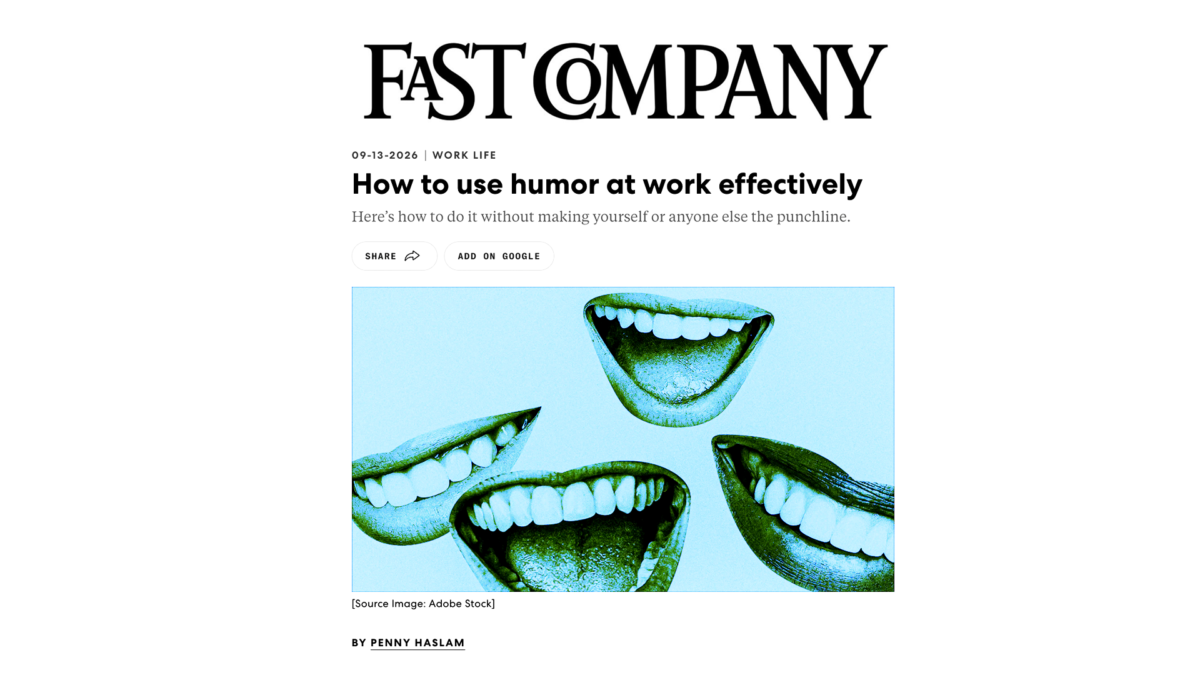
Fast Company – How to use humour at work effectively
Humour can be one of the quickest ways to connect with people at work. It can warm up a room, make a message more memorable and help colleagues see the person behind the job title. But used badly, it can distract, exclude or leave somebody else carrying the joke.
In this Fast Company article, Bit Famous MD Penny Haslam explores how leaders and professionals can use humour effectively, without making themselves — or anyone else — the punchline.
The article begins with a finance director addressing hundreds of employees. Nervous about being on stage, he recalls playing Kenickie in a school production of Grease and promises to sing “Greased Lightnin’” if anyone falls asleep during the annual figures. The remark gives the audience an unexpected glimpse of the person behind the spreadsheet and makes them more willing to listen.
Penny’s argument is simple: good workplace humour should help the room, rather than ask the room to admire the person making the joke. It can ease tension, bring people together and make difficult or dry subjects easier to engage with. But it should never come at another person’s expense.
She sets out six practical ways to get it right. These include avoiding ‘punching down’, keeping humour inclusive and rooted in situations everyone can recognise, and using self-deprecation without repeatedly undermining your own capability or credibility.
Penny also encourages people to notice what others already find amusing about them. You do not need to become the office comedian. A dry observation, a well-timed phrase or a naturally expressive reaction may be more than enough. The key is to use the kind of humour that feels natural and helps people feel included.
There is one firm rule, though: never use humour in an email. Without a smile, tone of voice or immediate response from the other person, even a carefully judged joke can easily appear sharp, confusing or simply fall flat.
The article is a reminder that humour is another form of communication. Used with awareness of yourself, your audience and the moment, it can help people feel more connected, more open and more ready to listen.